

Yoga therapy - is there anything therapeutic about yoga and where does our role end?
Authored: Moritz Ulrich | Reading time: 4 minutes | last edited: 02/02/2026
This question is at the centre of many conversations about yoga - in classes, on training courses and often very quietly after a lesson. As soon as we talk about yoga therapy, it's not just about effect, but also about responsibility, boundaries and attitude.
This article is therefore less about fixed definitions, and more about an honest exploration: What actually happens in the
Yoga Studio, when we teach yoga? When does yoga have a healing effect - and where does our role as yoga teachers end?
The most important points in brief – the 3 key points
- Yoga can have a healing effect without being a therapy:
Yoga practice creates conditions in which regulation, calmness and self-awareness are possible - without diagnosis, treatment or a therapeutic mission. - Clear roles protect everyone involved:
Yoga therapy is an independent speciality with a clear framework. In regular yoga classes, the role of the teacher ends with holding a safe space - not with therapeutic intervention. - Presence instead of solution expertise:
The effectiveness of yoga comes less from technique or explanation than from attitude, presence and allowing experience. Accompanying rather than treating strengthens personal responsibility and trust.

When yoga is therapeutic without being therapy
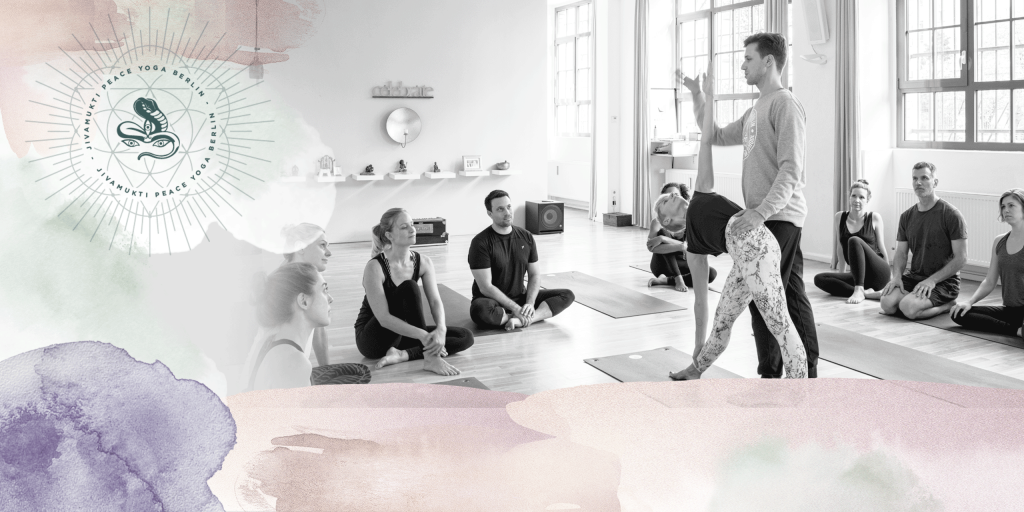
Many yoga teachers are familiar with these quiet, dense moments in class. After a short time, the atmosphere changes. The breath deepens, movements become slower, the room quieter. Sometimes emotions appear, sometimes simply a deep sigh of relief.
In moments like these, the idea that yoga is therapeutic comes to mind. And yes - yoga can have a healing effect. Not because we make diagnoses or provide targeted treatment, but because the practice creates conditions under which something can regulate itself: in the body, in the nervous system, in the mind.
We also experience this effect time and again at Peace Yoga Berlin. This is precisely why it is important to take a very close look at where this effect comes from - and where our role as
Yoga teacher ends.

Yoga therapy needs a clear framework
Therapy works by analysing. It looks for causes, patterns and symptoms and uses targeted methods to support change. Also Yoga therapy is an independent field with specific training programmes, clear concepts and a defined therapeutic mission.
Yoga in regular classes follows a different logic. It is less about treating problems and more about enabling experience. The breath is allowed to deepen, the mind is allowed to calm down, the body is allowed to show itself as it is - without a goal, without a diagnosis.
This distinction is crucial. Because only if we take it seriously can we teach responsibly.
Where does our role as yoga teachers end?
Yoga can take people to very deep levels. Issues such as grief, anger, old injuries or self-doubt can suddenly become tangible - sometimes completely unexpectedly. At such moments, yoga teachers quickly find themselves at the centre of a process that they had not planned.
This shows how important boundaries are. It is not our job to continue working therapeutically or to offer solutions. Our job is to remain present, maintain a safe framework and not overload the space.
Accompanying instead of treating. Being there instead of intervening.
This clarity protects both sides: the trainees from giving up responsibility that is their own, and the teachers from falling into roles that are too demanding or not legally or professionally appropriate.
Presence instead of diagnosis
Especially at a time when therapeutic terms are omnipresent, the impulse to categorise or label experiences easily arises. But yoga does not need labels. What yoga needs is presence.
Presence means listening, perceiving, enduring silence and not having to explain everything. Sometimes an honest „I don't know“ is more healing than any well-intentioned answer. Safety does not come from control, but from openness.
And perhaps this is precisely the therapeutic aspect of yoga - without it becoming a therapy.
Yoga therapy and personal responsibility
A central point in the dialogue with Yoga therapy is the question of personal responsibility. Yoga should not create dependencies. On the contrary: a good yoga practice strengthens the ability to perceive oneself and trust one's own feelings.
If someone says after the lesson:
„I can't explain exactly what has happened, but I feel lighter“ - this often reveals the quiet effectiveness of yoga. Not a spontaneous cure, not a big promise - but a small, real step.

The quality with which we are in the room
As their experience grows, many yoga teachers realise that it is not the perfect sequence or the best explanation that makes the difference, but the quality with which someone is in the room. One's own inner attitude, trust in the process and the ability to endure not-knowing have a significant impact on the effect of a class.
Sometimes less guidance is more.
Sometimes silence is the wisest decision.
Conclusion: Is yoga therapeutic - and where does our role end?

Yoga undoubtedly has a healing dimension. But Yoga therapy only begins when a clear therapeutic framework has been established. Yoga classes are about presence, space and experience - not diagnosis or treatment.
Perhaps this is precisely the essence of yoga: being there without wanting to fix anything, and thus opening up the space in which change can happen of its own accord.
 DE_DE
DE_DE  EN
EN 